Motor skills are the abilities that allow children to control and coordinate their body movements using their muscles. In early childhood, motor development includes both gross motor skills (large body movements like running and jumping) and fine motor skills (small hand movements like writing and buttoning clothes). These skills are essential for learning, independence, confidence, and school readiness.
When parents search what are motor skills, they’re usually looking for simple, clear answers about how their child grows, moves, and learns. From reaching for a toy to drawing pictures or climbing playground equipment, motor development shapes everyday life.
Let’s break it down in a practical, easy-to-understand way.
What Are Motor Skills?
Motor skills refer to the movements and actions of the muscles. These skills develop progressively from birth and continue refining throughout childhood.
They are divided into two main categories:
- Gross motor skills – large body movements
- Fine motor skills – small, precise movements
Together, these gross and fine skills form the foundation of physical development in early childhood.
Understanding Gross Motor Skills
Gross motor skills involve large muscle groups in the arms, legs, and torso. These movements require strength, balance, coordination, and body awareness.
Examples of Gross Motor Skills
- Rolling and crawling
- Walking and running
- Jumping and hopping
- Climbing playground equipment
- Throwing and catching a ball
- Balancing on one foot
Why Gross Motor Skills Matter
Strong gross motor development helps children:
- Build muscle strength
- Improve posture and balance
- Develop spatial awareness
- Participate confidently in sports and group play
- Sit upright and focus during classroom activities
Physical stability is important for school readiness, as children need body control to sit, transition between activities, and engage in structured learning.
Understanding Fine Motor Skills
Fine motor skills involve smaller muscle movements, especially in the hands and fingers. These skills require precision, control, and coordination.
Examples of Fine Motor Skills
- Holding a pencil or crayon
- Turning pages of a book
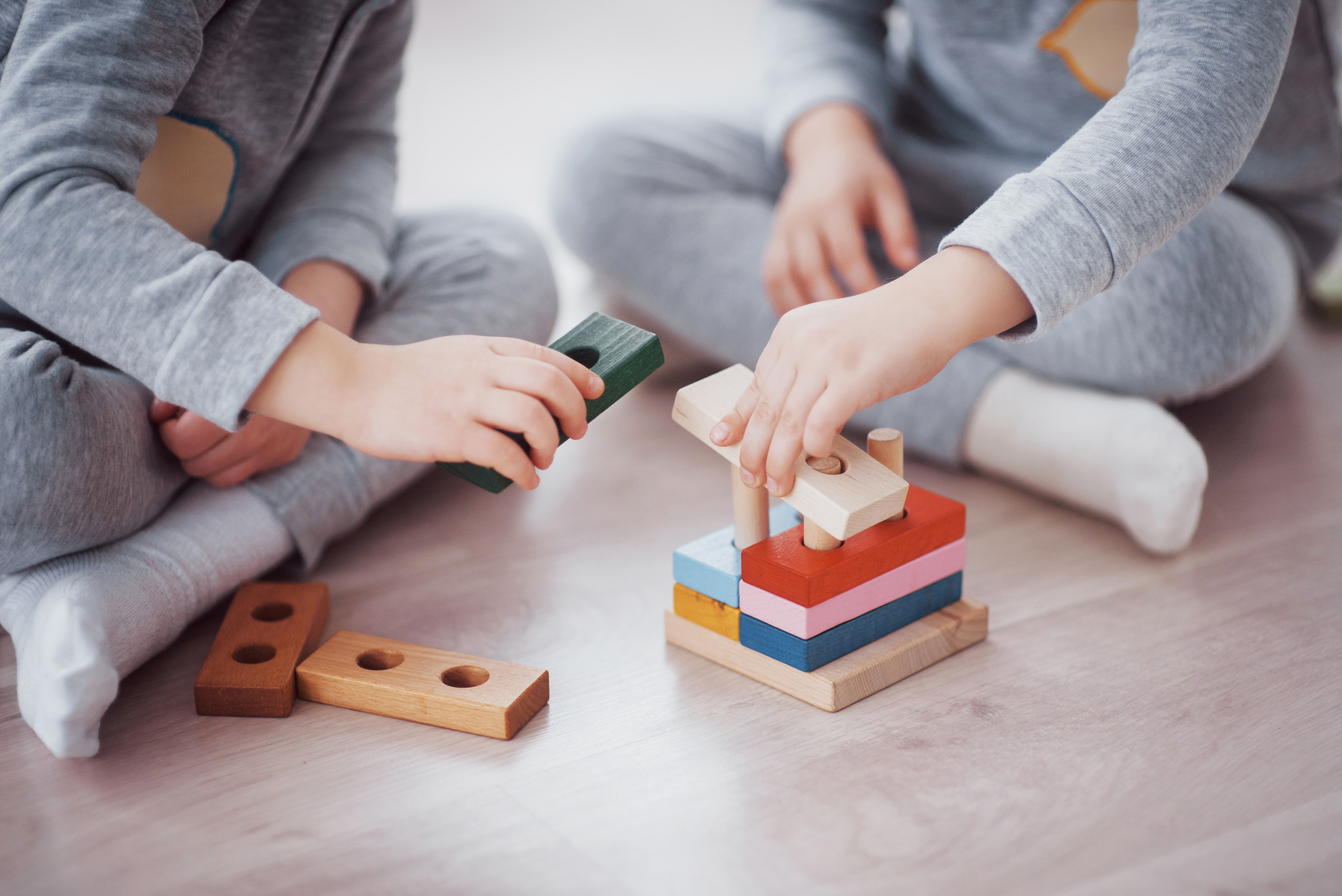
- Stacking small blocks
- Buttoning and zipping clothing
- Using scissors
- Feeding themselves with utensils
- Drawing shapes
Why Fine Motor Skills Matter
Fine motor development helps children:
- Learn to write and draw
- Complete classroom tasks
- Manage self-care routines (zipping jackets, tying shoes)
- Improve hand–eye coordination
- Build focus and concentration
Without strong fine motor control, children may struggle with tasks that require precision and patience.
What Is Motor Development in Early Childhood?
Motor development in early childhood refers to the progression of physical movement skills from infancy through the preschool years. These skills evolve as children grow stronger, gain coordination, and practice movement through play.
Early childhood is a critical time for developing both gross and fine motor abilities because the brain and body are rapidly forming connections that support learning, balance, and coordination.
Play-based activities are one of the most effective ways to support motor development.
At What Age Do Motor Skills Develop?
While every child develops at their own pace, developmental milestones provide a general guide.
0–6 Months
- Lifts head during tummy time
- Rolls from tummy to back
- Grasps objects placed in hand
- Brings hands to mouth
6–12 Months
- Sits without support
- Crawls or scoots
- Pulls to stand
- Transfers objects between hands
- Begins using a pincer grasp (thumb and finger)
1–2 Years
- Walks independently
- Begins running
- Climbs onto furniture
- Stacks 2–4 blocks
- Scribbles with crayons
- Feeds themselves with a spoon
2–3 Years
- Kicks a ball
- Jumps with both feet
- Walks up stairs with support
- Turns pages one at a time
- Builds taller block towers
- Begins simple dressing tasks
3–5 Years
- Hops on one foot
- Pedals a tricycle
- Climbs confidently
- Cuts with scissors
- Draws simple shapes
- Buttons and unbuttons clothing
These milestones show how motor skills gradually become more refined and coordinated over time.
Why Are Motor Skills Important for Overall Development?
Motor development influences much more than physical activity.
1. Supports Learning
Before children can write letters, they need strong hand muscles. Before they can focus at a desk, they need posture and core stability. Motor skills directly impact readiness for learning.
2. Builds Confidence
When children master climbing, dressing themselves, or catching a ball, they develop a sense of capability and independence.
3. Encourages Social Interaction
Physical confidence makes it easier to join playground games and participate in group activities.
4. Promotes Independence
Everyday tasks like feeding, dressing, carrying a backpack, and organising belongings rely on coordinated movement.
5. Supports Emotional Regulation
Active play, dancing, outdoor exploration, and movement-based activities help children release energy and manage emotions in healthy ways.
How to Support Motor Development at Home
You don’t need specialised equipment. Everyday activities make a significant difference.
- Encourage outdoor play daily
- Offer blocks, puzzles, and stacking toys
- Provide drawing and colouring materials
- Allow time for independent dressing
- Create simple obstacle courses
- Practice throwing and catching games
- Include music and movement activities
Consistent opportunities to move, explore, and practice are key.
Signs a Child May Need Extra Support
Every child develops differently, but it may help to seek guidance if a child:
- Frequently trips or struggles with balance
- Avoids playground activities
- Has difficulty holding crayons or utensils
- Struggles with basic self-care tasks
- Shows frustration during fine motor activities
Early guidance and support can make a meaningful difference in long-term development.
How Beginnings Early Learners Supports Motor Development
At Beginnings Early Learners in Alfredton and Sunbury, our qualified early childhood educators intentionally design play-based programs that strengthen both gross and fine motor skills every day.
From outdoor climbing and obstacle courses to creative art and hands-on learning experiences, children build coordination, confidence, and independence in a safe and nurturing environment.
Our programs focus on supporting school readiness while encouraging children to explore, move, and grow at their own pace.
If you would like to see how we support your child’s development in action, we welcome you to book a tour at our Alfredton or Sunbury centre.
Frequently Asked Questions
What are motor skills in simple words?
Motor skills are the abilities that help us move our bodies using our muscles. They include both big movements like running and small movements like writing.
What is the difference between gross and fine motor skills?
Gross motor skills involve large body movements such as jumping or climbing, while fine motor skills involve small, precise movements such as drawing or buttoning a shirt.
At what age do motor skills fully develop?
Motor skills continue developing throughout childhood and into adolescence as coordination, strength, and control improve over time.
Why are motor skills important in early childhood?
They support physical health, readiness for learning, independence, social participation, and overall development.
How can I improve my child’s motor skills?
Encourage regular active play, provide hands-on activities, and allow children to practice everyday tasks independently.