Watch a 3-year-old trying to button their favourite shirt. Their little fingers fumble and twist, but the button won’t cooperate. Then one day, click! It slides through perfectly, and their face lights up with pure joy.
This moment doesn’t happen by chance. It’s the result of countless small movements and playful practice that quietly build the strength children need. The best part? You don’t need fancy tools or structured lessons to make it happen.
Why Fine Motor Skills Activities Matter
Those tiny hands do more than grab toys. They’re preparing for bigger challenges ahead. Every squeeze, pinch, and twist strengthens the small muscles children rely on throughout their lives.
Fine motor skills activities help children zip jackets, spread jam on toast, turn book pages, and tie their shoes. These movements create independence, one small success at a time.
Research shows that strong fine motor abilities connect directly to literacy development and brain growth. Children who control their hand movements often find that reading and writing come more naturally.
Why Preschool Years Are Special
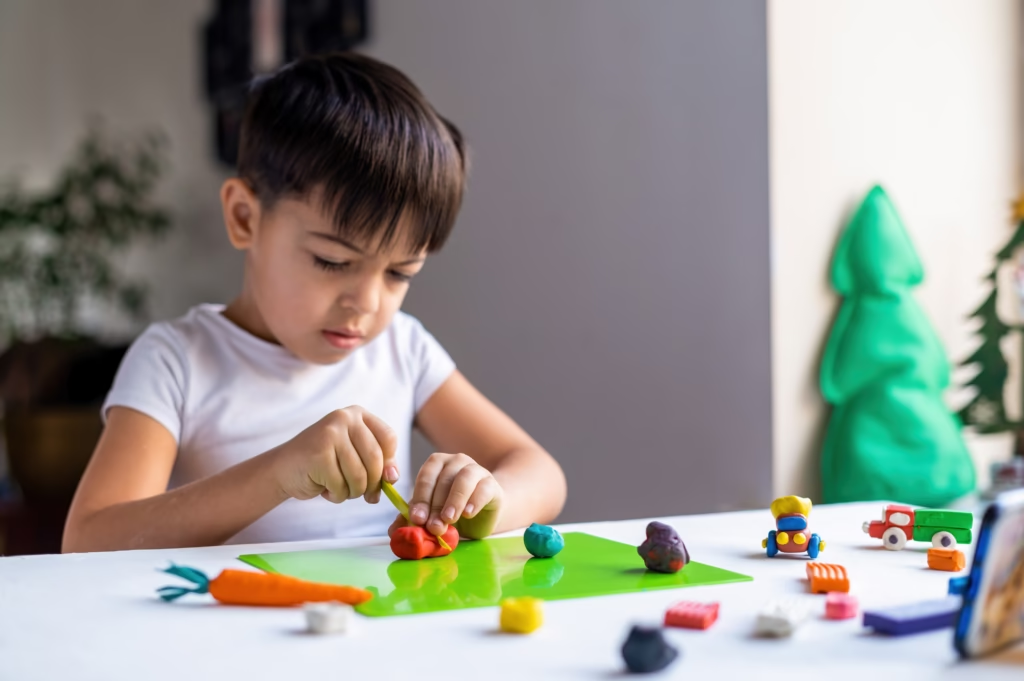
Between ages 3 and 5, children’s brains are like sponges, soaking up skills at an incredible pace. This is the perfect time to introduce fine motor activities for preschoolers that feel like play. When your child rolls playdough, they’re building hand strength. When they string beads, they’re developing coordination for tying their shoes. When they place stickers carefully, they’re preparing for writing.
Here’s what makes this stage magical: children don’t know they’re “working” on skills. To them, it’s all just fun. That playdough snake becomes a story character. Those beads turn into a gift for Grandma. Learning happens naturally, wrapped in imagination.
The confidence from mastering small tasks ripples outward. Children who manage buttons and zippers feel capable. They don’t need adult help with every little thing. This independence shapes how they see themselves.
Easy Fine Motor Activities for Preschoolers
Look around your home with fresh eyes. You’ll discover opportunities hiding in plain sight. These simple fine motor skills activities use everyday items you probably already have.
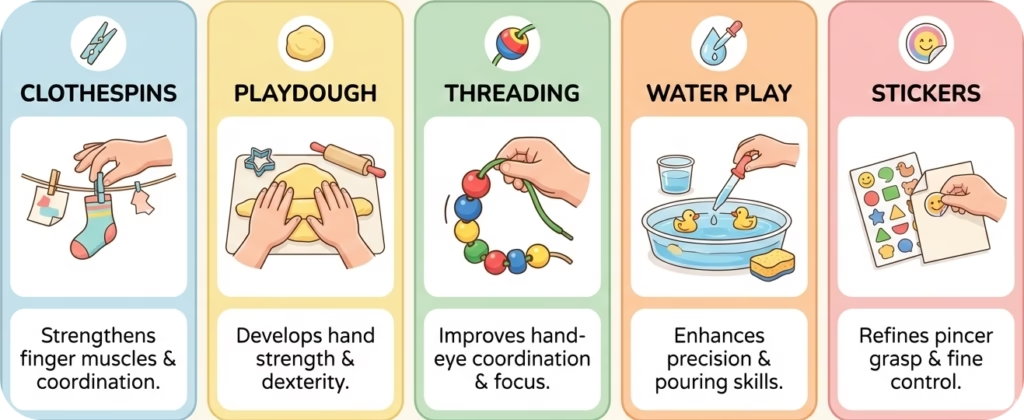
Clothespin Games
- Wooden clips are secretly brilliant teaching tools. Set up a cardboard box and challenge your child to attach clothespins around the edges. The squeezing motion works the same muscles they’ll use for scissors and pencils later.
- Make it a game by drawing colours on clothespins and matching spots on the box. Fine motor practice becomes a puzzle to solve.
Playdough Magic
- There’s a reason playdough has remained popular for generations. That satisfying squish builds real strength, and possibilities are endless.
- Roll snakes, make balls, create flat pancakes. Hide small treasures inside dough balls and have your child dig them out using only their fingers. Make pretend food or build a dough zoo. The pinching and rolling mimics the exact grip children need for holding pencils, but it feels like pure play.
Threading Fun
- Grab chunky beads and a thick shoelace. Show your child how to thread beads onto the lace and watch concentration take over. This activity demands focus and coordination.
- Try threading Cheerios onto pipe cleaners or pasta onto yarn. Create patterns with colours. Each variation adds complexity while keeping it fun.
Water Play
- Fill small containers with coloured water. Provide medicine droppers or squeeze bottles. The challenge? Transfer water from one container to another.
- This builds remarkable hand strength through repeated squeezing and releasing. Plus, it’s almost meditative watching coloured water transfer drop by drop. Mix colours to combine science with fine motor practice!
Sticker Time
- Peeling stickers requires surprising dexterity. Small fingers must separate layers, pinch the edge, and pull carefully.
- Draw circles on paper. Can your child place each sticker inside without crossing the line? To keep them challenged, gradually decrease the size of the circles over time. For younger children, simply sticking anywhere develops that crucial pincer grip.
Creative Fine Motor Skills Activities
Art and creativity naturally incorporate skill-building without children even realising they’re developing important abilities.
Scissor Practice
- Start where success comes easily. Let your child snip playdough into pieces—no lines to follow, no mistakes possible. Progress to cutting thick straws, then introduce paper with bold lines to cut along.
- Straight lines first, then curves, eventually complex shapes. Always use child-safe scissors and supervise carefully.
Paper Tearing Collages
- Ripping paper into small pieces requires both hands working different jobs. One tears while the other holds and positions.
- Gather magazines and coloured paper. Let your child rip freely, then arrange pieces into a collage. Different textures work the hands in subtly different ways.
Cotton Bud Painting
- Hand your child cotton buds instead of thick brushes. The smaller tool demands a precise grip and greater control.
- Try dot painting or tracing along drawn shapes. They’re preparing for pencil control without pressure, all while having creative fun.
Making Fine Motor Skills Activities Part of Daily Life
The most powerful learning happens during daily routines. These everyday moments become natural fine motor activities for preschoolers.
Mealtime Practice
- Every meal offers opportunities. Stabbing food with forks, scooping with spoons, and holding sandwiches—these are comprehensive fine motor workouts.
- Involve children in meal prep as well. Stirring, pouring, arranging crackers, sprinkling cheese—each task builds different hand control. Opening containers and peeling bananas provide authentic challenges.
Getting Dressed
- Buttons, zippers, snaps, laces—getting dressed is an advanced fine motor course disguised as a daily necessity.
- Start with large buttons on loose clothing, then progress to smaller buttons and tighter zippers. Create a practice board with different fasteners for calm, unpressured moments.
Nature Exploration
- Step outside, and opportunities appear everywhere. Picking acorns, pinching flower petals, digging with small tools, collecting pebbles—nature provides endless variations.
- Plant seeds together. Children poke holes, place tiny seeds, then gently cover them. Water plants with spray bottles for sustained squeezing action.
Building Fun
- Construction toys deserve special mention. Stacking blocks requires balance. Connecting LEGO demands exact alignment and appropriate force.
- Start with larger pieces and gradually introduce smaller, more complex challenges. Problem-solving keeps children engaged while their hands grow stronger.
What to Expect at Different Ages
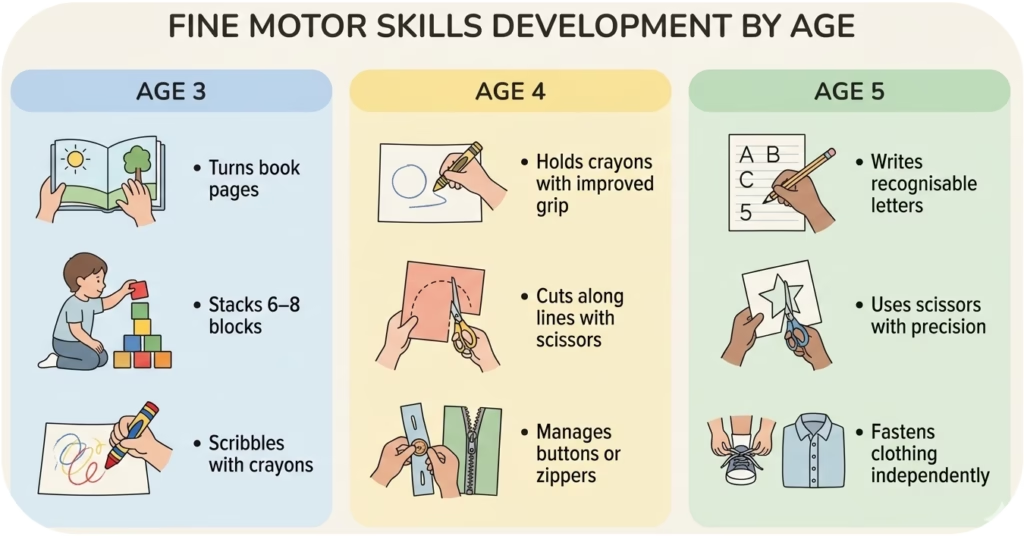
At the age of 3
3-year-olds typically turn book pages one at a time, build towers six to eight blocks high, and scribble with increasing control. They’re starting to show hand preference and can feed themselves.
At the age of 4
By 4, most children hold crayons with better grip, cut along lines with growing accuracy, and independently manage most dressing tasks. They enjoy more intricate toys and handle smaller objects confidently.
At the age of 5
5-year-olds generally show clear hand dominance, write recognisable letters, and use scissors skilfully. They complete most fasteners without help and show notable precision.
Remember—these are guidelines, not rules. Children develop at their own pace, and individual variation is completely normal.
Tips for Making Practice Work
When implementing fine motor skills activities at home,
- Consistency beats intensity. 5 minutes daily beats an hour once a week.
- Follow your child’s interests. Vehicle-lovers might enjoy washing toy cars with spray bottles. Young chefs might eagerly knead dough.
When activities align with interests, motivation naturally follows.
- Create comfortable spaces with good lighting and minimal distractions.
- Celebrate effort and progress: “You worked really hard on that puzzle” or “I noticed you buttoned that yourself today.”
Growing Together at Beginnings Early Learners
At Beginnings Early Learners, our curriculum is designed to integrate these vital skills into every part of the day. Whether it’s through sensory play in Alfredton or creative arts in Sunbury, we provide an environment where your child can flourish.
If you’re looking for a supportive environment for your preschooler, book a tour to learn more about our programs and how we support every step (and every small movement) of your child’s development.